Weight gain during perimenopause is often driven by hormone fluctuations, insulin resistance, thyroid dysfunction, stress, inflammation, and loss of muscle mass—not simply eating too much.
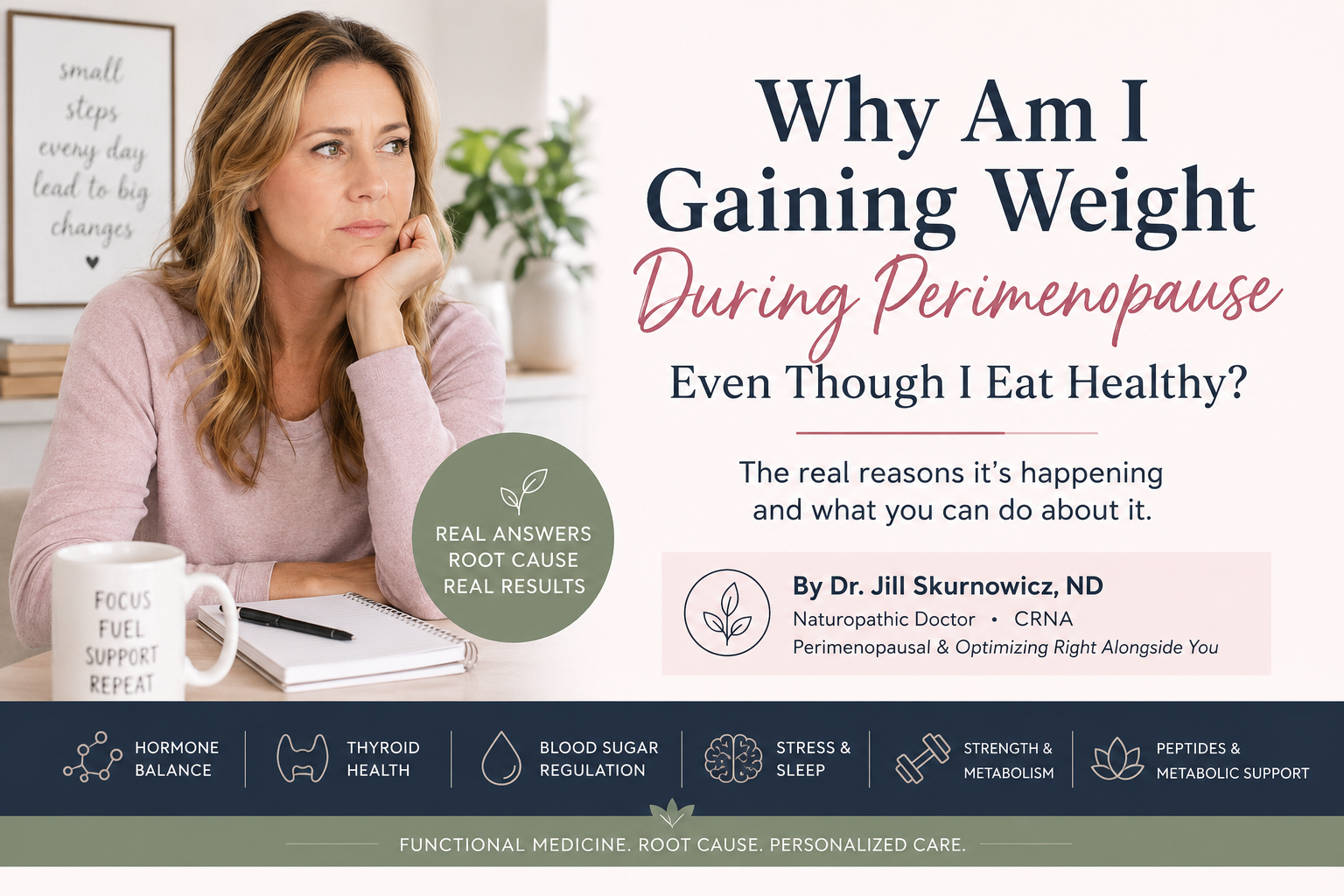
Why Am I Gaining Weight During Perimenopause Even Though I Eat Healthy?
By Dr. Jill Skurnowicz, ND
If you’re in your 40s or 50s and suddenly gaining weight despite eating healthy, exercising, and doing all the “right things,” you’re not alone.
In fact, this is one of the most common concerns I hear from women in my practice.
Many women tell me:
“I haven’t changed anything.”
“I eat less than my husband.”
“I work out more than I did in my 30s.”
“Why is the weight still going up?”
As both a naturopathic doctor and a woman navigating perimenopause myself, I understand how frustrating this can be.
The truth is that weight gain during perimenopause is rarely caused by a lack of willpower. More often, it is the result of hormonal and metabolic changes occurring beneath the surface.
Let’s talk about what is really happening.
What Is Perimenopause?
Perimenopause is the transition period leading up to menopause. It often begins in a woman’s 40s but can start earlier.
During this phase, estrogen and progesterone levels fluctuate significantly. These hormonal shifts affect much more than reproductive health.
They influence:
- Metabolism
- Blood sugar regulation
- Muscle mass
- Sleep quality
- Stress resilience
- Thyroid function
- Body fat distribution
Many women notice that the same strategies that worked in their 20s and 30s simply stop working.
The Real Reasons Weight Gain Happens During Perimenopause
1. Insulin Resistance Often Increases
One of the biggest drivers of weight gain during perimenopause is insulin resistance.
Insulin is the hormone responsible for moving sugar from the bloodstream into cells.
As estrogen begins to fluctuate, many women become less sensitive to insulin.
This can lead to:
- Increased abdominal fat
- Sugar cravings
- Fatigue after meals
- Difficulty losing weight
- Increased inflammation
Many women are told their glucose is “normal,” yet their fasting insulin levels reveal a very different story.
2. Loss of Muscle Mass Slows Metabolism
Beginning around age 30, women gradually lose muscle mass unless they actively work to maintain it.
During perimenopause this process accelerates.
Muscle is metabolically active tissue. The more muscle you have, the more calories your body burns at rest and the less insulin resistant you become.
This is one reason why many women find that eating the same way they always have suddenly results in weight gain.
Resistance training becomes increasingly important during this phase of life.
3. Thyroid Dysfunction Is Frequently Overlooked
Thyroid dysfunction is another common contributor to weight gain.
In my practice, I frequently see women told their thyroid is “normal” despite experiencing:
- Weight gain
- Hair loss
- Constipation
- Fatigue
- Brain fog
- Depression
Comprehensive thyroid evaluation often includes:
- TSH
- Free T4
- Free T3
- Reverse T3
- Thyroid antibodies
Sometimes the issue is not whether the thyroid is functioning, but whether thyroid hormone is actually reaching the cells effectively.
4. Chronic Stress and Cortisol Matter More Than Most People Realize
Many women today are carrying tremendous stress.
They are managing careers, families, aging parents, relationships, and countless responsibilities.
When stress becomes chronic, cortisol levels may become dysregulated.
Elevated cortisol can contribute to:
- Belly fat accumulation
- Increased cravings
- Sleep disruption
- Blood sugar instability
- Fatigue
The body often perceives chronic stress as a signal to conserve energy and store fat.
5. Sleep Quality Directly Impacts Weight
Poor sleep affects nearly every hormone involved in weight regulation.
Even one night of poor sleep can influence:
- Insulin sensitivity
- Hunger hormones
- Cravings
- Cortisol levels
Many women in perimenopause experience disrupted sleep due to hormonal fluctuations.
Addressing sleep quality is often one of the fastest ways to support metabolic health.
6. Inflammation Can Block Weight Loss
Chronic inflammation is frequently overlooked.
Common contributors include:
- Ultra-processed foods
- Food sensitivities
- Gluten exposure
- Dairy sensitivity
- Environmental toxins
- Gut dysfunction
Inflammation increases stress signaling throughout the body and can make weight loss significantly more difficult.
What Worked For Me Personally
As someone going through perimenopause myself, I understand how challenging these changes can be.
I found that simply eating less was not the answer.
Instead, success came from addressing the underlying physiology:
- Optimizing hormone balance
- Supporting thyroid function
- Prioritizing strength training
- Managing stress
- Improving sleep quality
- Maintaining adequate protein intake
- Supporting metabolic flexibility
The goal was not to punish my body.
The goal was to understand what my body needed during this new phase of life.
Where Peptides May Help
In appropriate patients, peptides can be another tool to support metabolic health.
Peptides are not magic weight loss solutions and should never replace healthy lifestyle foundations.
However, certain peptides may help support:
- Appetite regulation
- Blood sugar balance
- Body composition
- Metabolic flexibility
When used appropriately and under medical supervision, they can complement a comprehensive metabolic health program.
The Bottom Line
If you are gaining weight during perimenopause despite eating healthy, exercising, and trying your best, please know that you are not failing.
Your body is changing.
The answer is not usually eating less or exercising harder.
The answer is identifying the underlying factors affecting your metabolism and creating a personalized plan that addresses the root causes.
At Natural Care Institute, we evaluate hormone balance, thyroid function, insulin resistance, inflammation, nutritional status, and metabolic health to help women better understand what is driving their symptoms.
Because when we identify the cause, we can create a strategy that actually works.
Dr. Jill Skurnowicz, ND
Natural Care Institute
Birmingham, Michigan