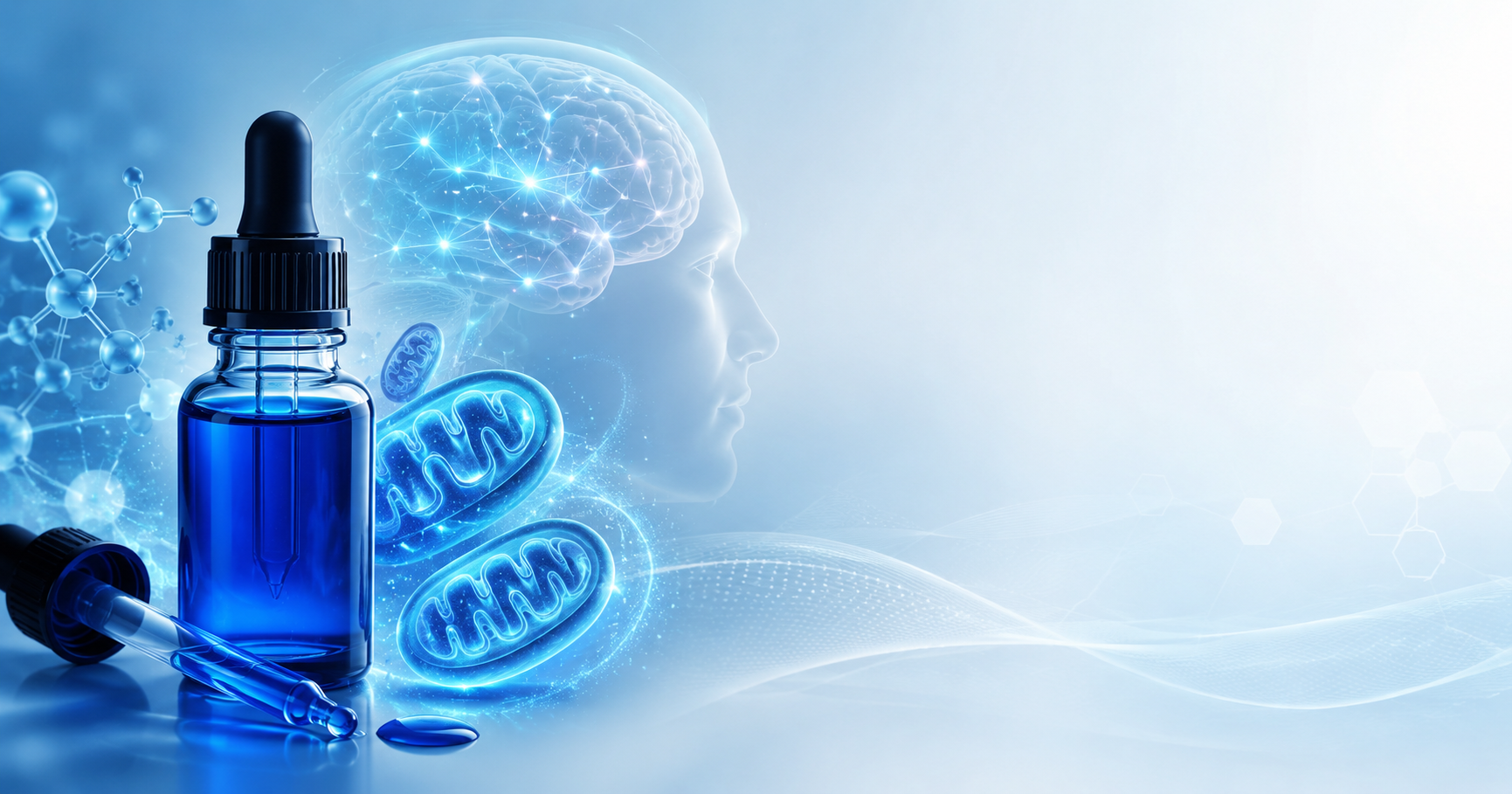
Methylene blue is being studied for its potential effects on mitochondrial function, cellular energy, and cognitive performance.
Methylene Blue Therapy: What the Science Really Says
By Jill Skurnowicz, ND, MS, CRNA | Natural Care Institute, Birmingham, MI
If you follow longevity podcasts or wellness influencers, you have probably seen the bright blue tongue photos and bold claims. Methylene blue therapy has jumped from the pages of old chemistry textbooks to the top of everyone’s supplement stack—and patients are walking into my Birmingham office asking whether it lives up to the hype. The honest answer is: the science is genuinely interesting, but it deserves a level head, not a viral one.
What Is Methylene Blue Therapy?
Methylene blue is a synthetic compound first made in the 1800s as a textile dye. It later became one of the oldest medications still in use, approved to treat a rare blood condition called methemoglobinemia. What has researchers excited today is something different: at very low doses, methylene blue appears to support the mitochondria—the tiny “batteries” inside your cells that turn food and oxygen into usable energy.
In functional medicine, we care deeply about mitochondrial function because when those batteries run down, people feel it as fatigue, brain fog, and slower recovery. Methylene blue therapy refers to using carefully dosed, pharmaceutical-grade methylene blue to support that cellular energy system.
The Science: Mitochondria, Brain Energy, and Aging
Here is what makes this compound unusual. Inside the mitochondria, methylene blue can act as an alternative electron carrier, essentially giving tired cells a backup route to keep producing energy while lowering oxidative stress. Early research suggests this may translate into better mental clarity and cellular resilience.
A small 2025 study found that a single low dose improved short-term memory recall in healthy adults, and imaging studies have shown modest increases in activity in the brain’s frontal regions. Scientists are also studying methylene blue for conditions ranging from age-related cognitive decline to post-viral brain fog.
That said, I want to be clear with my patients: most of this research is early-stage, done in small groups or laboratories. Methylene blue is not FDA-approved for energy, memory, longevity, or brain fog, and it is not a cure for any disease. It is a promising tool that should be used thoughtfully, not a miracle in a dropper bottle.
Who Might Consider It
Patients most curious about methylene blue tend to be dealing with stubborn fatigue, mental fog, or an interest in healthy aging. In my practice, I look at the whole picture first. Often, the real drivers of low energy are thyroid imbalances, nutrient deficiencies, blood sugar issues, or overlooked lab markers—which is exactly why I run a deeper fatigue workup (naturalcareinstitute.com/blood-tests-for-fatigue) before reaching for any single therapy.
Methylene blue also fits naturally into a broader regenerative and energy-support toolkit. Many patients pair mitochondrial support with NAD+ therapy (naturalcareinstitute.com/nad-iv-therapy-birmingham-mi)—and at Natural Care Institute we often favor subcutaneous NAD+ injections over long IV infusions, since a quick SubQ injection delivers similar benefits without tying you to a chair for two to four hours. Others explore peptide therapy (naturalcareinstitute.com/peptide-therapy-birmingham-mi-2) or gentle, needle-friendly IV options (naturalcareinstitute.com/painless-iv-therapy-birmingham-mi) as part of a personalized plan.
Safety First: The Serotonin Warning
This is the part I never skip. Methylene blue has mild MAO-inhibiting properties, which means it can interact dangerously with antidepressants and other serotonin-raising medications—including SSRIs, SNRIs, and MAOIs. Combining them can trigger serotonin syndrome, a rare but serious reaction.
For that reason, methylene blue therapy should never be self-prescribed from an internet powder. Dose, purity, and your full medication list all matter. Pharmaceutical-grade product and medical supervision are non-negotiable.
Our Approach in Birmingham, MI
At Natural Care Institute, we start with your goals, your history, and your labs—not the trend of the week. If methylene blue therapy is a reasonable fit, we discuss appropriate low dosing, screen your medications carefully, and monitor how you respond. If it is not a fit, we will tell you plainly and point you toward what will actually move the needle.
Frequently Asked Questions
Is methylene blue therapy safe?
At low, pharmaceutical-grade doses under medical supervision, it is generally well tolerated in healthy adults. It is unsafe when combined with antidepressants or serotonin-raising drugs, which is why professional guidance matters.
Does methylene blue really boost energy and focus?
Early research is promising for mitochondrial energy and short-term cognitive performance, but studies are small and it is not FDA-approved for these uses. Think of it as a supportive tool, not a guaranteed fix.
Why does methylene blue turn your tongue and urine blue?
Because it is a dye. A temporary bluish tint to the tongue or urine is a harmless, expected effect at typical doses.
The information in this post is educational and is not medical advice. It is not intended to diagnose, treat, cure, or prevent any disease. Please consult a qualified healthcare provider before starting any new therapy, especially if you take prescription medication.
Ready to find out what’s really behind your fatigue or brain fog? Schedule a consultation at Natural Care Institute in Birmingham, MI. Book online at naturalcareinstitute.com/appointments or call (248) 845-8516.